
A single-use mixing system is useful when media preparation, buffer preparation and temporary storage need to stay simple, controlled and easy to integrate into real production workflows.
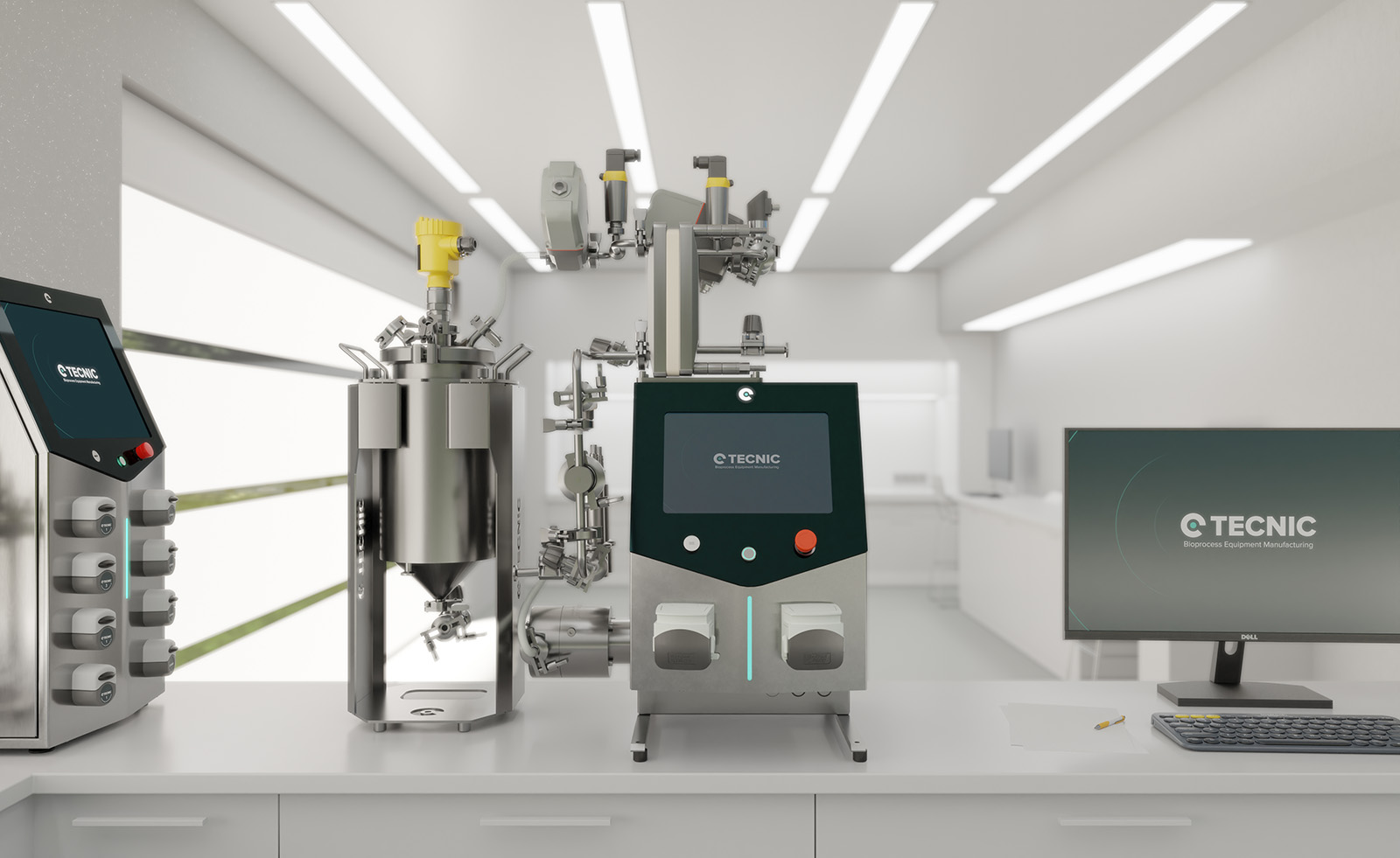
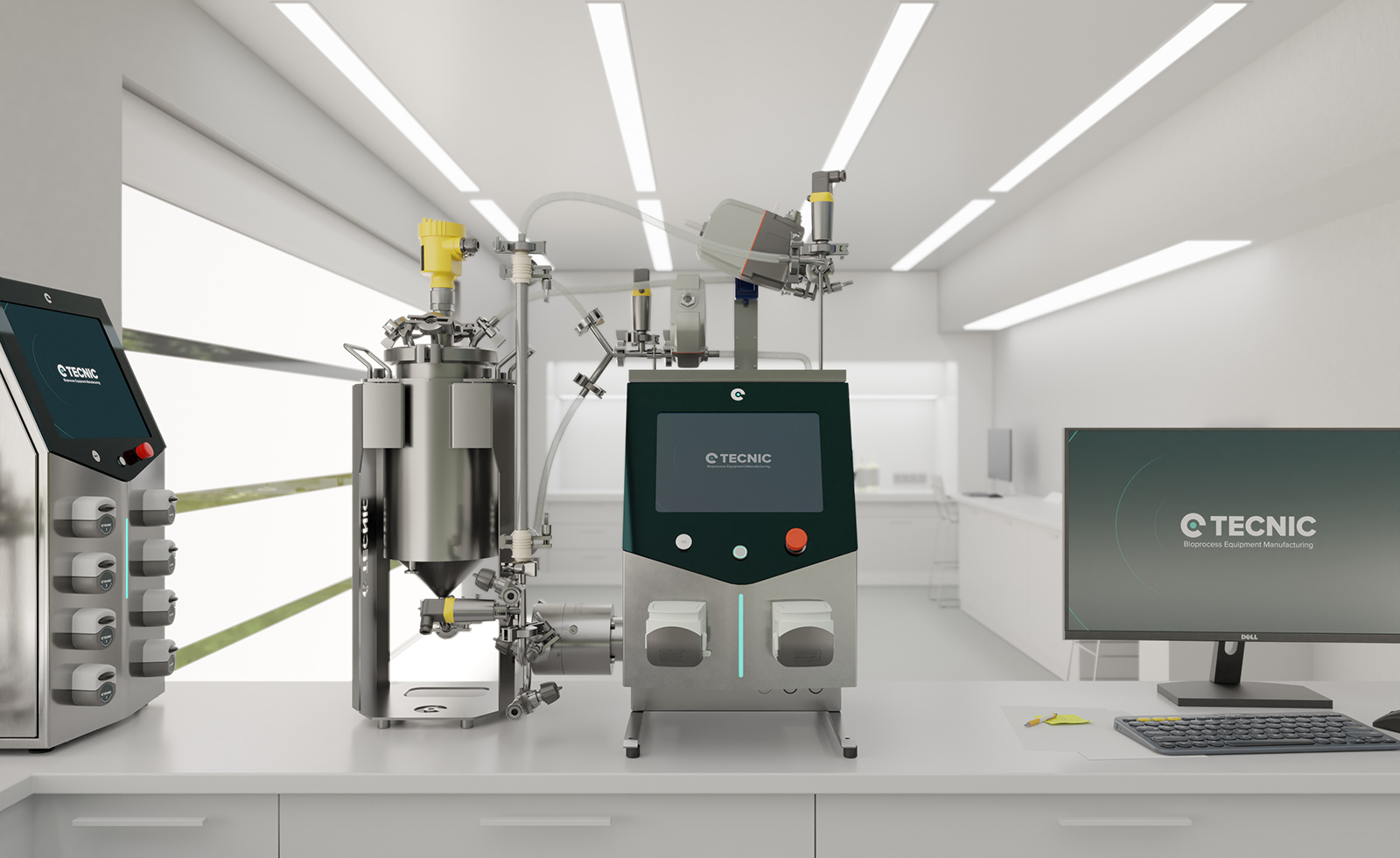
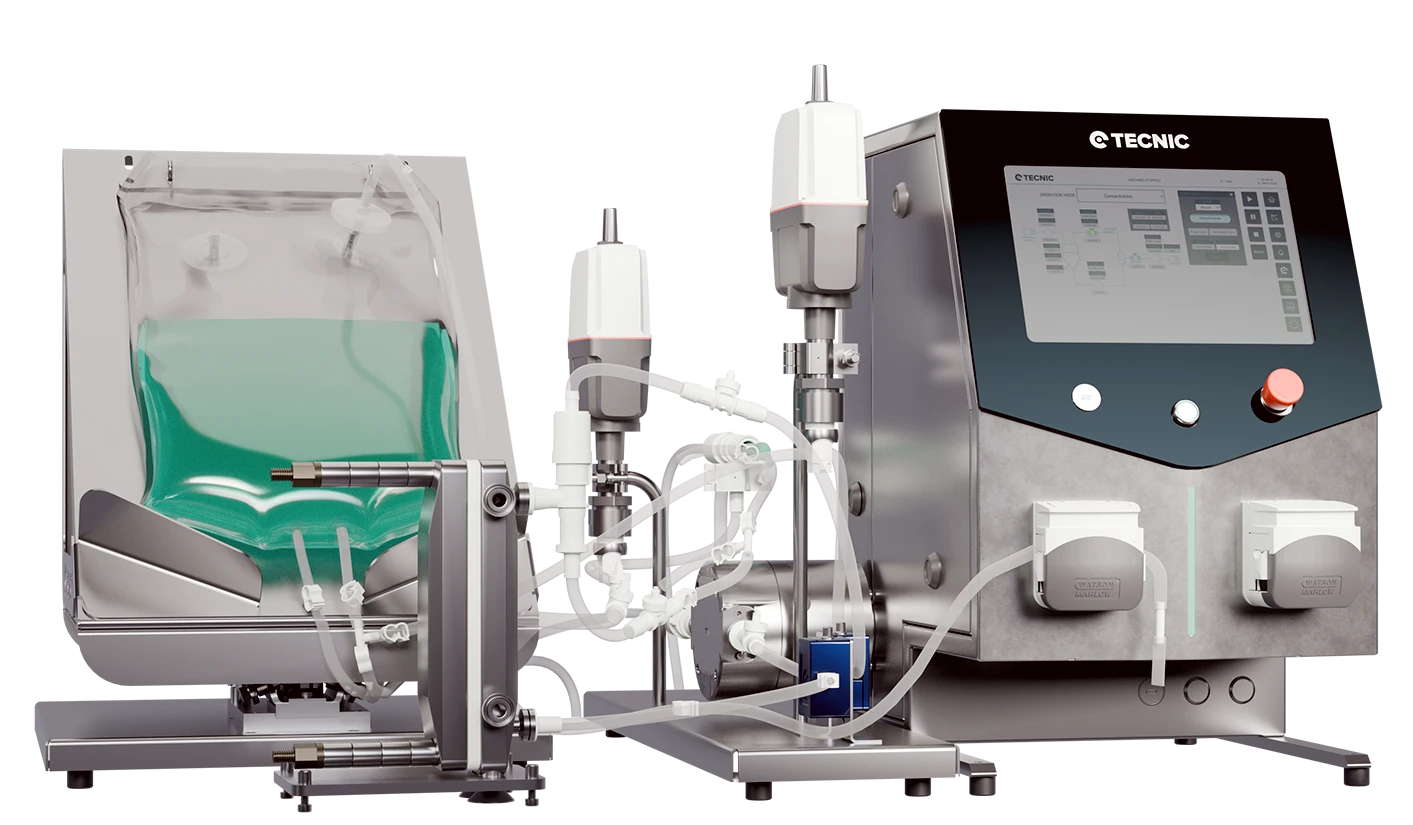
That is where the ePlus Mixer fits well. It combines a compact control unit, a mobile tank platform, non-invasive magnetic agitation and optional single-use sensors in one platform designed for Life Sciences processes.
A strong single-use mixer is not only about agitation. It is about combining bag format, tank design, weight control, dosing and automation into one practical workflow.
What is a single-use mixing system?
A single-use mixing system is designed to prepare and handle liquids in a controlled way without relying on reusable product-contact paths. In practice, that often means using a dedicated tank platform with a compatible single-use bag and a mixing mechanism that supports homogeneous batches.
In the case of the ePlus Mixer, the system is presented for Life Sciences processes, including cell culture and microbial workflows, with use cases such as media preparation, buffer preparation, mixing, temporary storage and adjustment of pH, conductivity and temperature according to configuration.
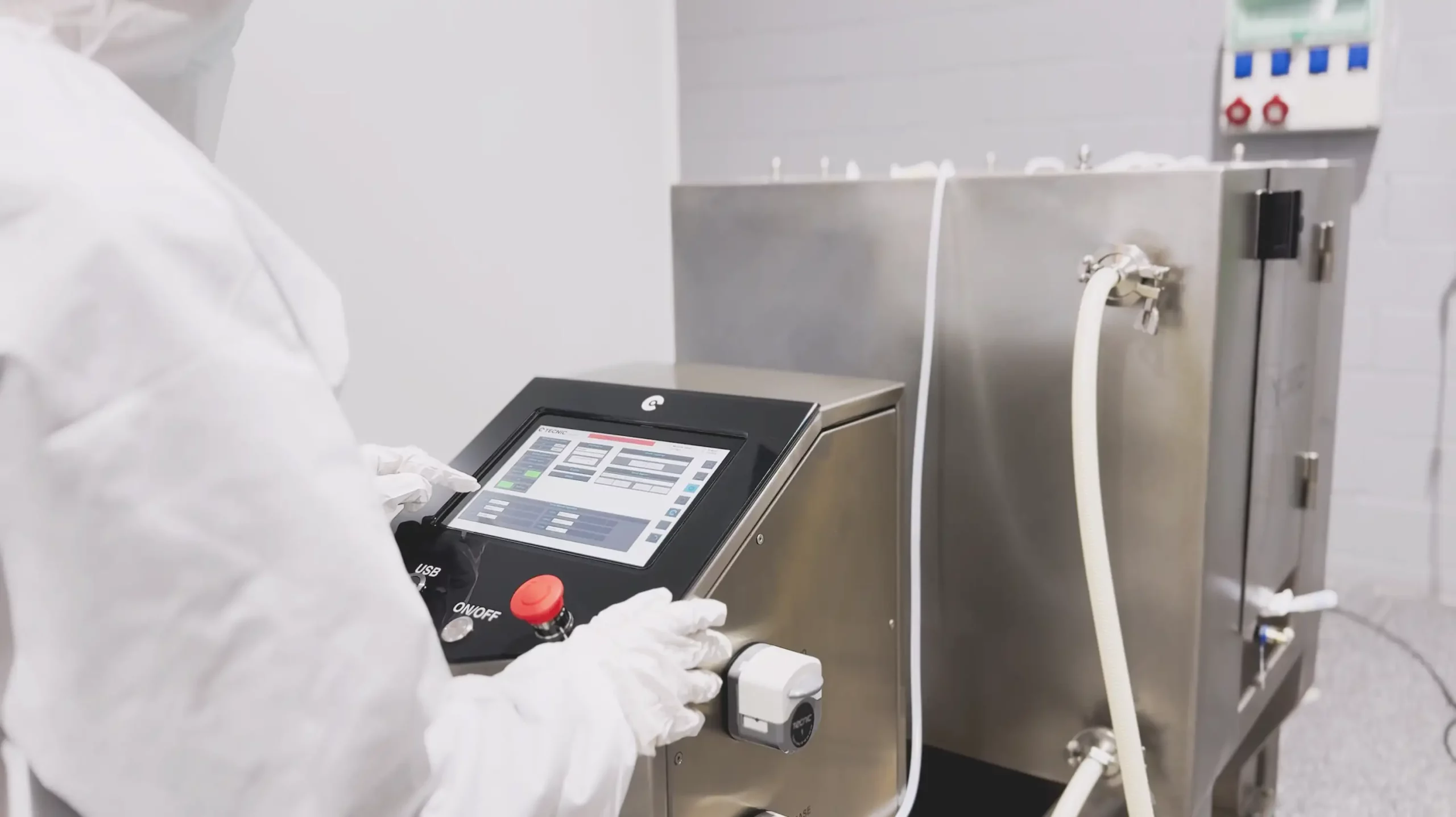
The value of a single-use mixer is not only the bag. It is the full operating logic around the bag.
Where a single-use mixer fits in real bioprocess workflows
Single-use mixing systems matter most when preparation and handling steps need to stay flexible, repeatable and easy to implement. Media preparation and buffer preparation are the most obvious use cases, but temporary storage and controlled additions are also part of the same route.
Useful when liquid composition and volume need to be prepared in a controlled and repeatable way.
Important when pH, conductivity and dosing logic must stay aligned with the target formulation.
Relevant when prepared liquids need to remain inside one practical single-use process path.
Core platform design
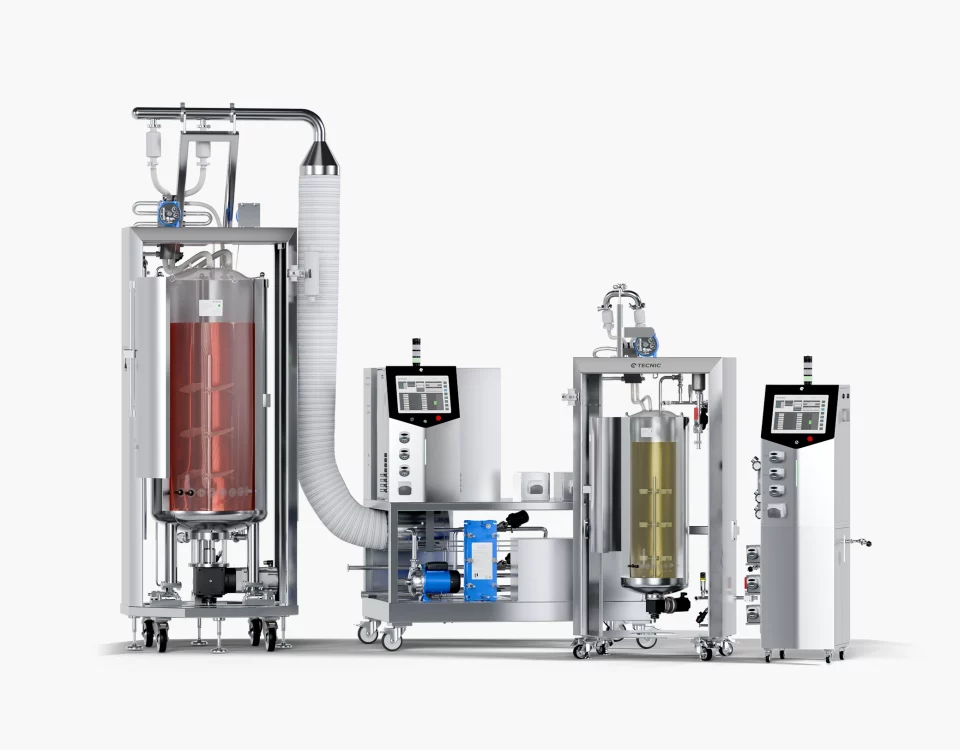
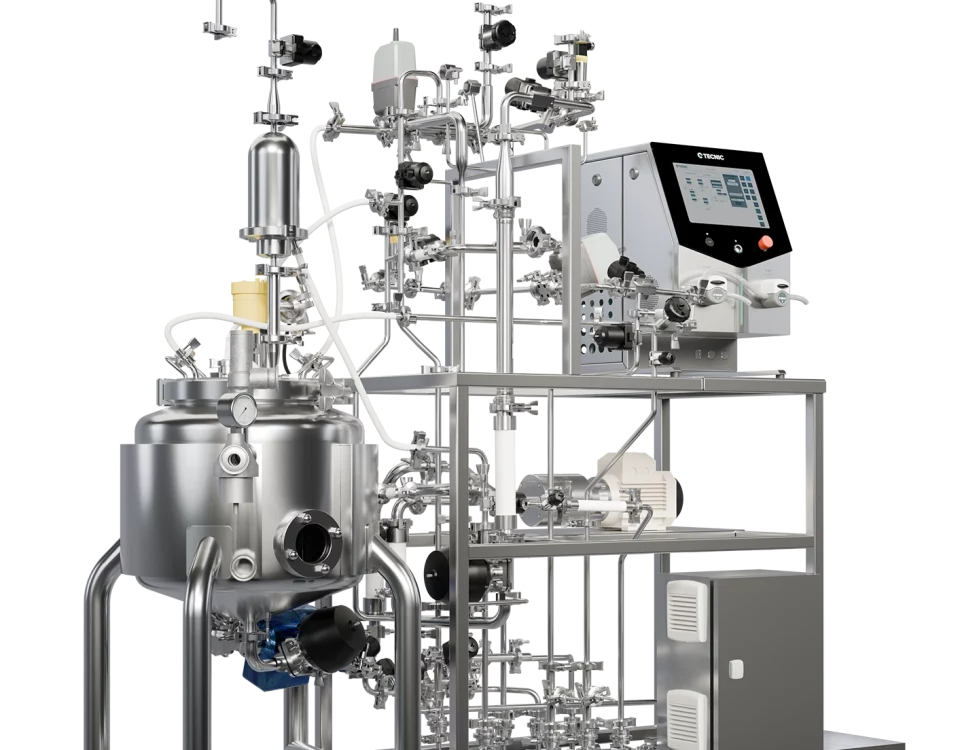
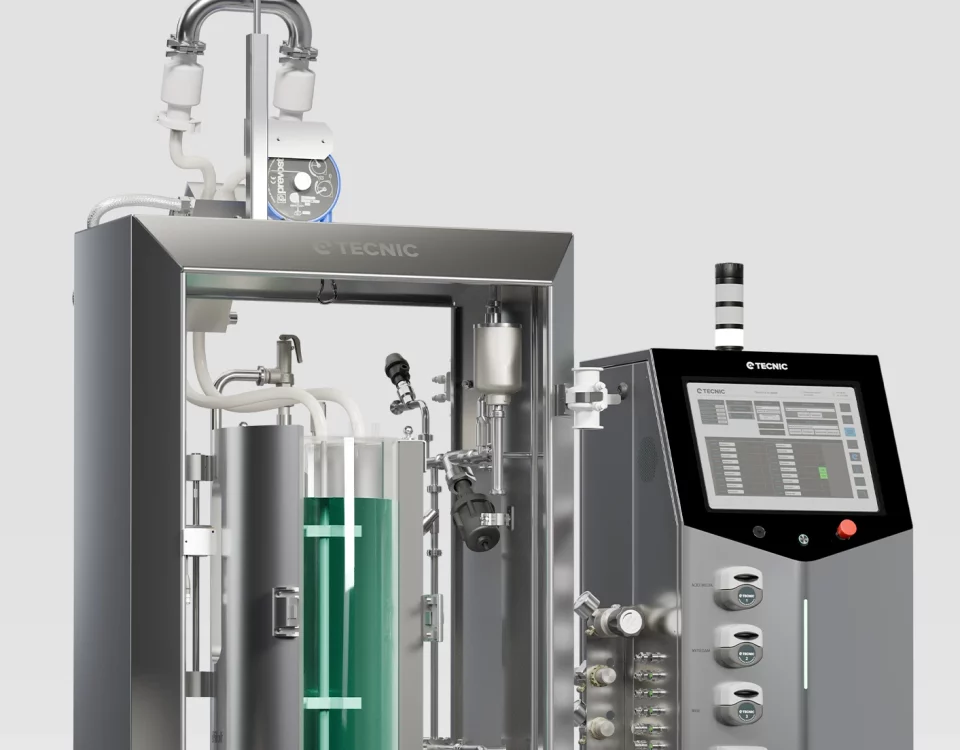
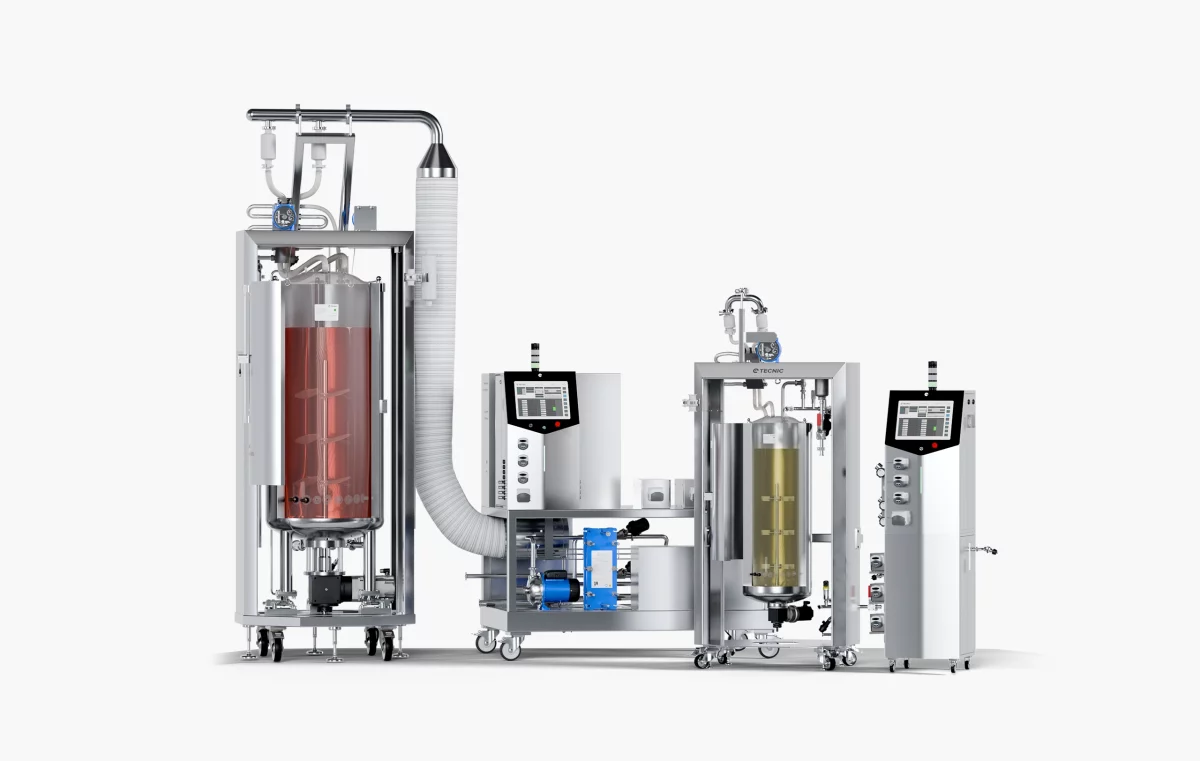
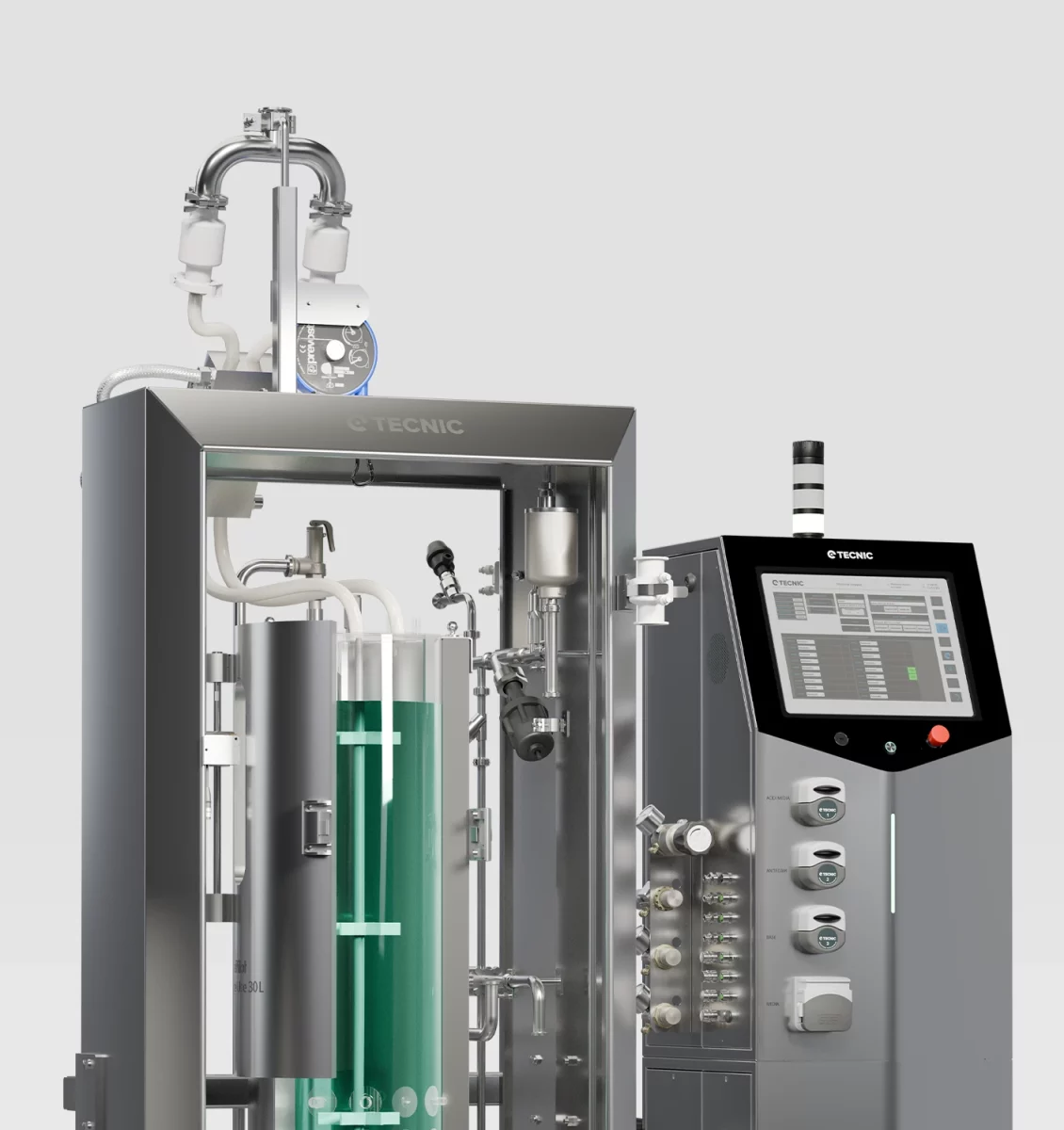
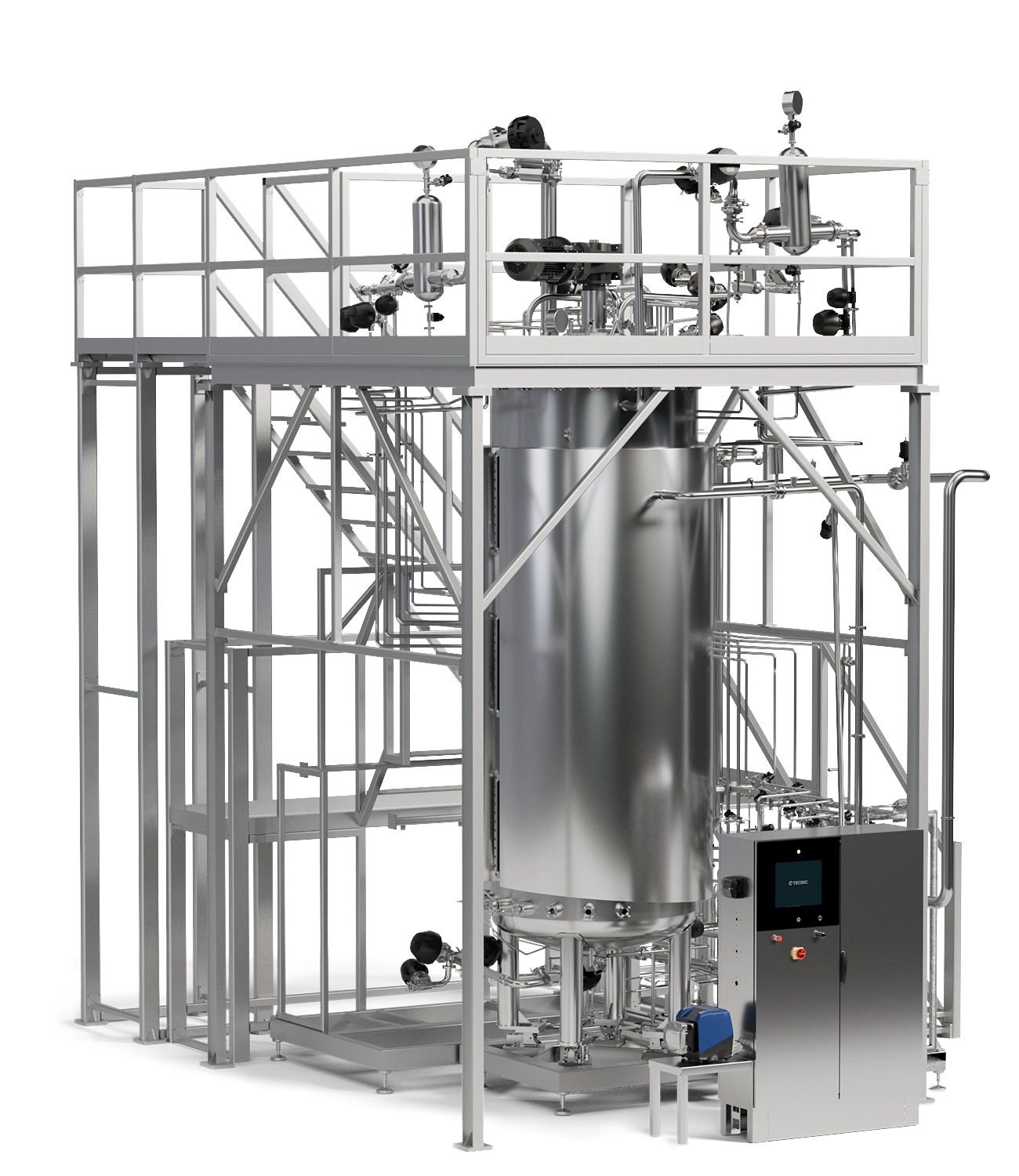
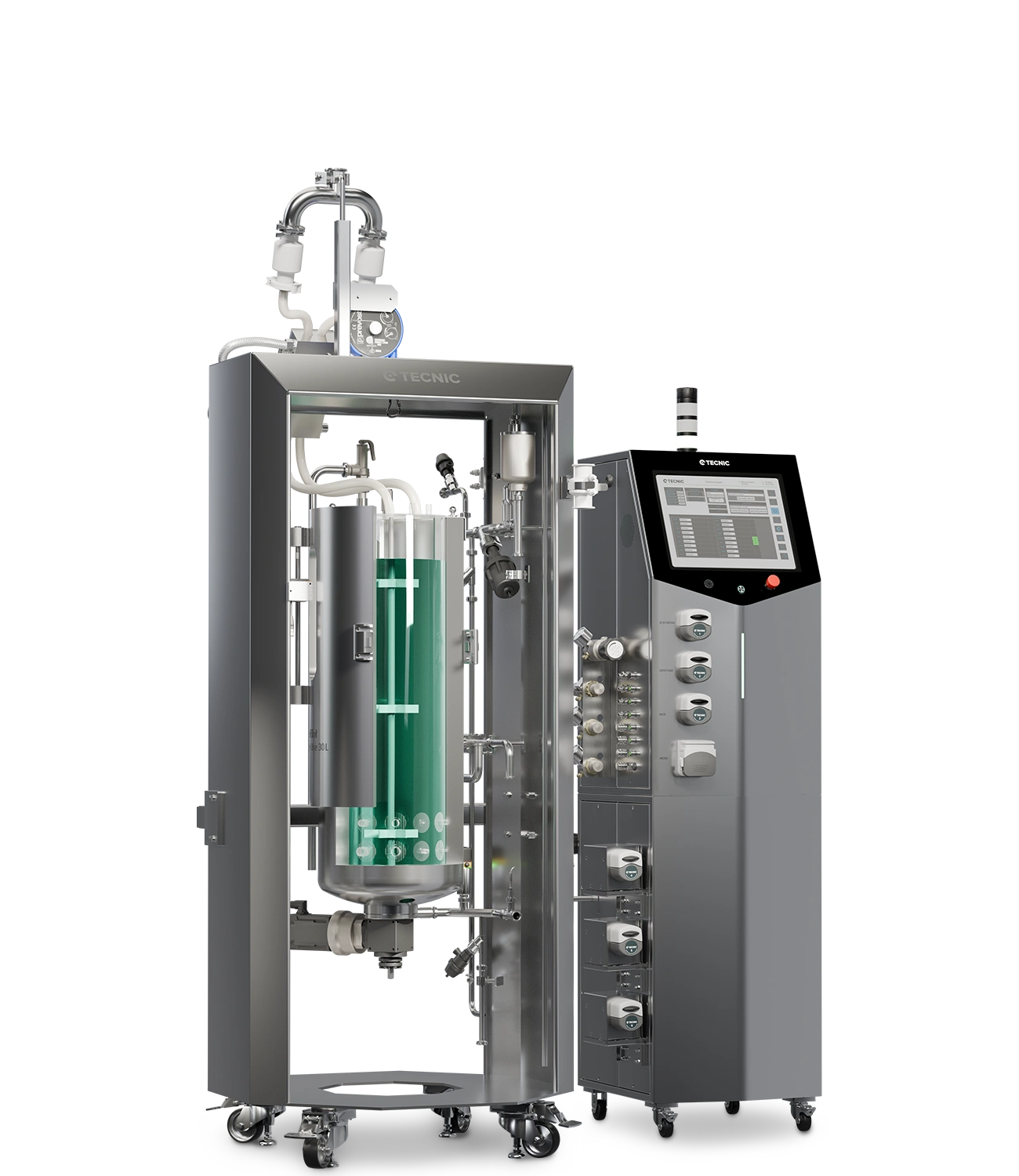
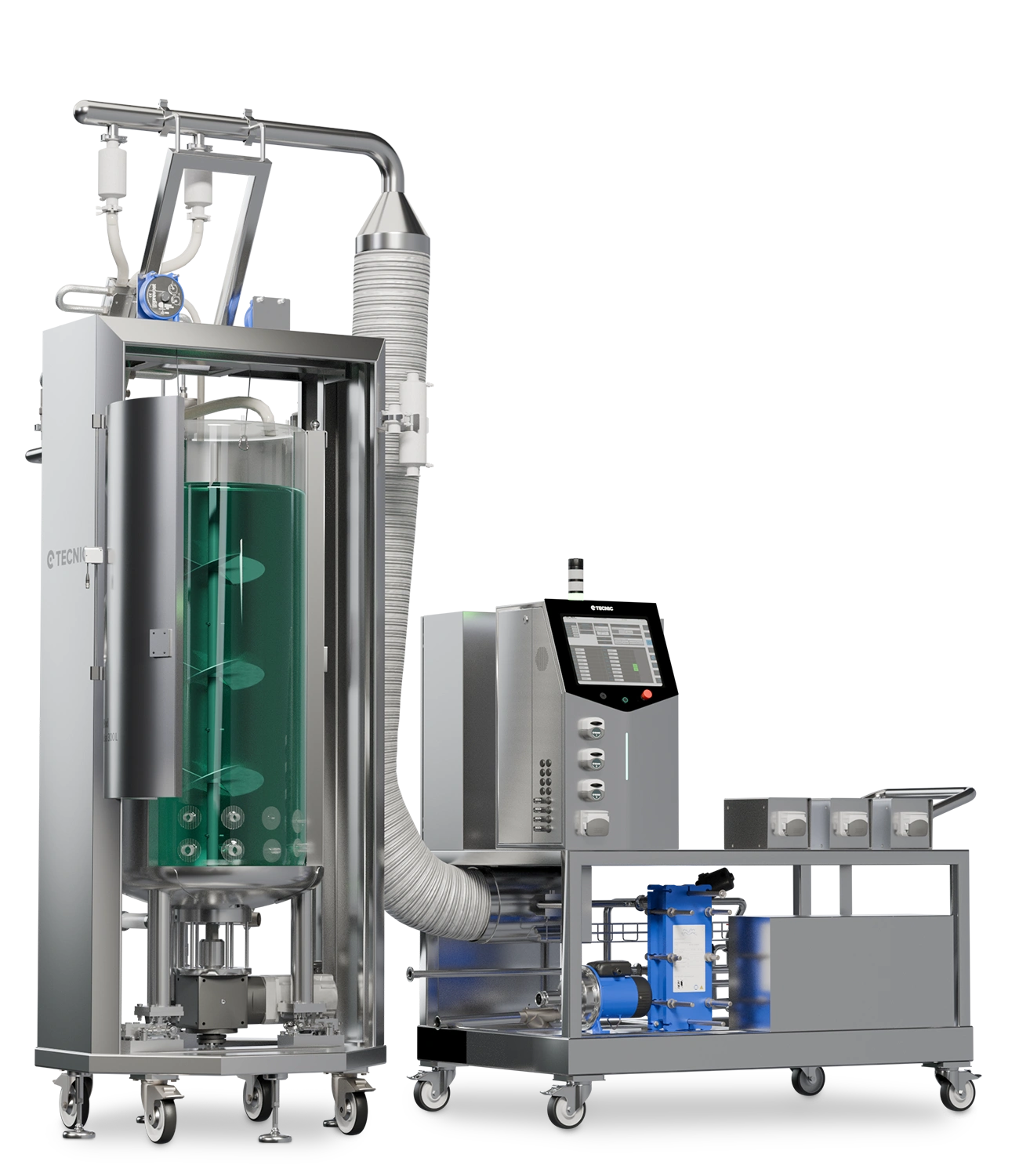
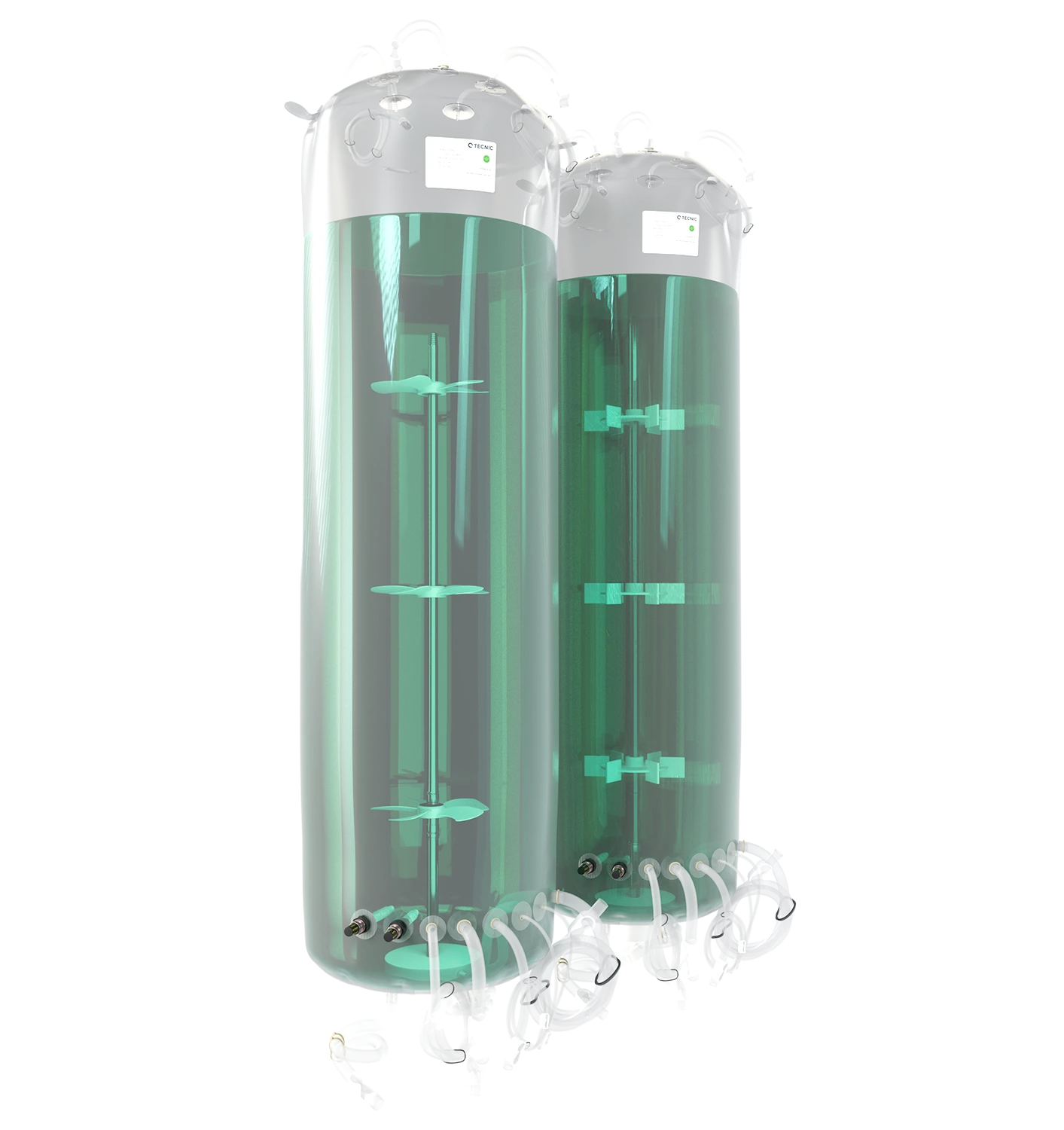
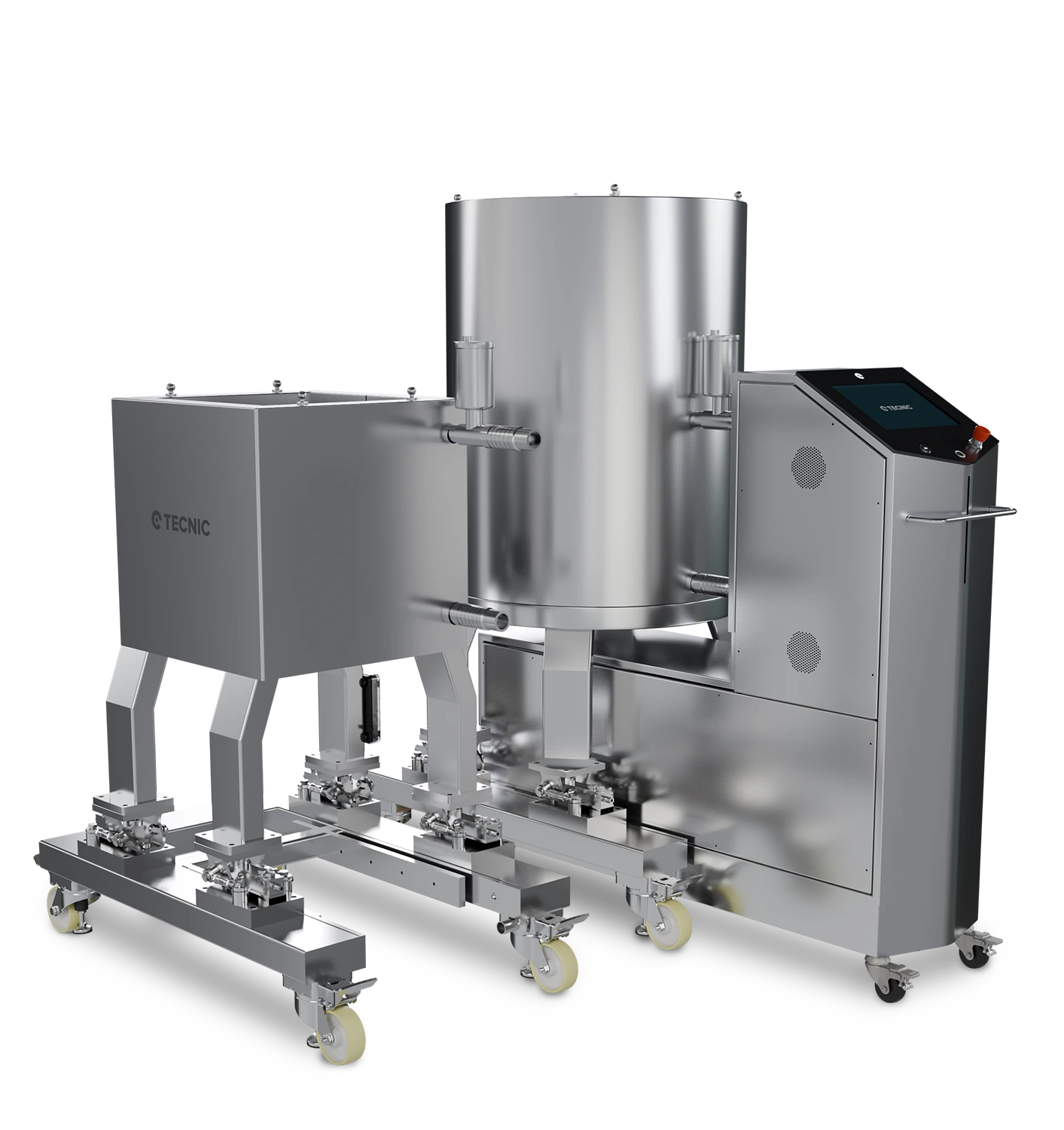
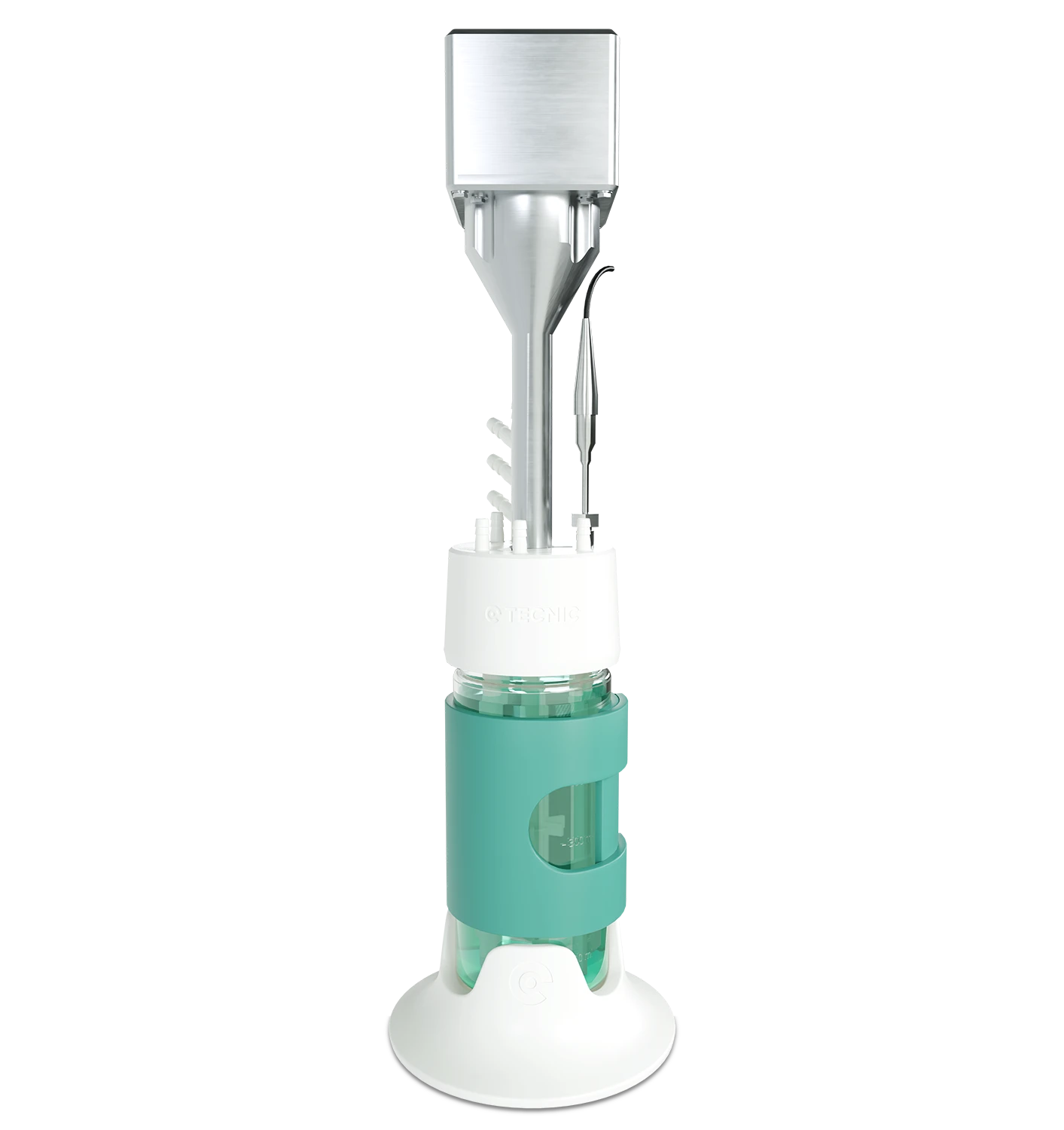
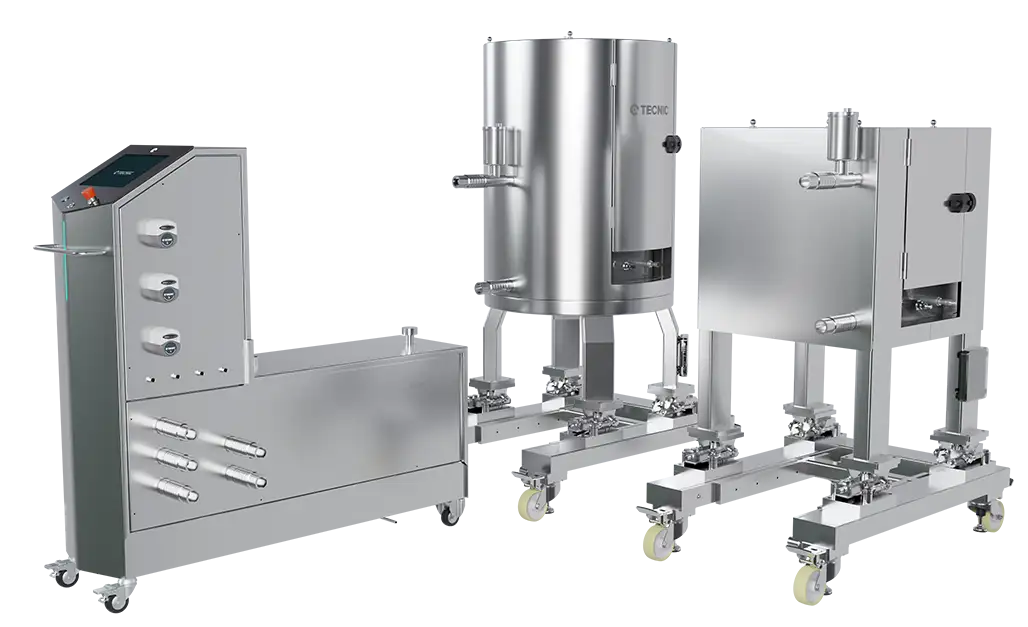
The ePlus Mixer platform is built around four connected elements: the control tower, the tank platform, the eBag 3D consumable and the non-invasive magnetic mixing system.
Industrial PLC and touchscreen HMI for signal acquisition, actuator control, alarms, trends and profiles.
Mobile tank frame with bottom drain, interlocked access door, wheels and integrated load cells.
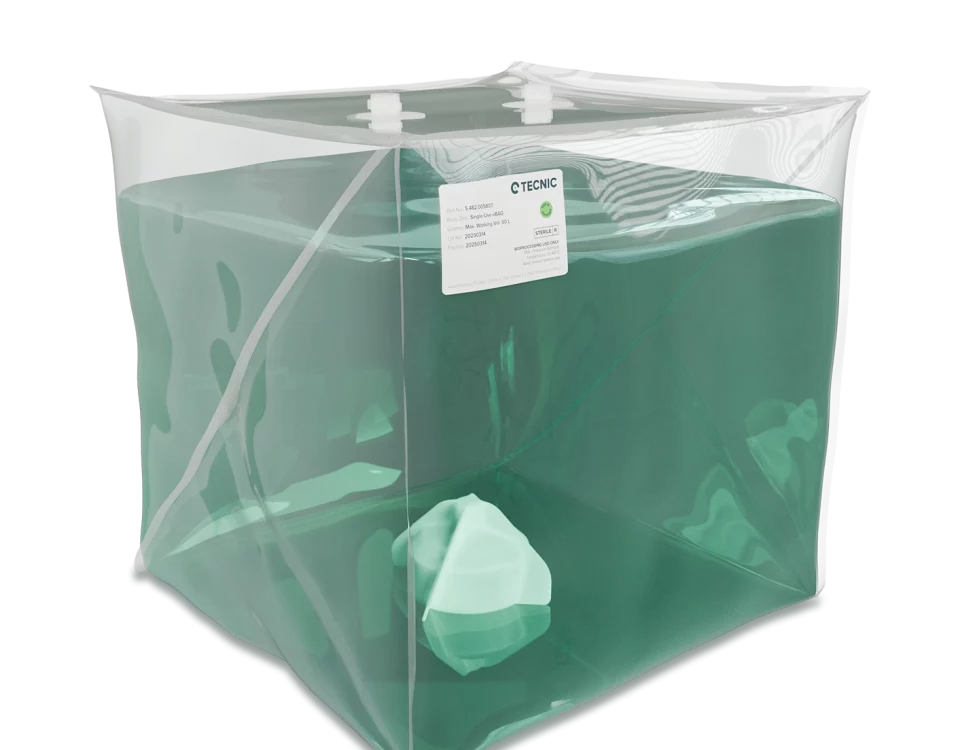
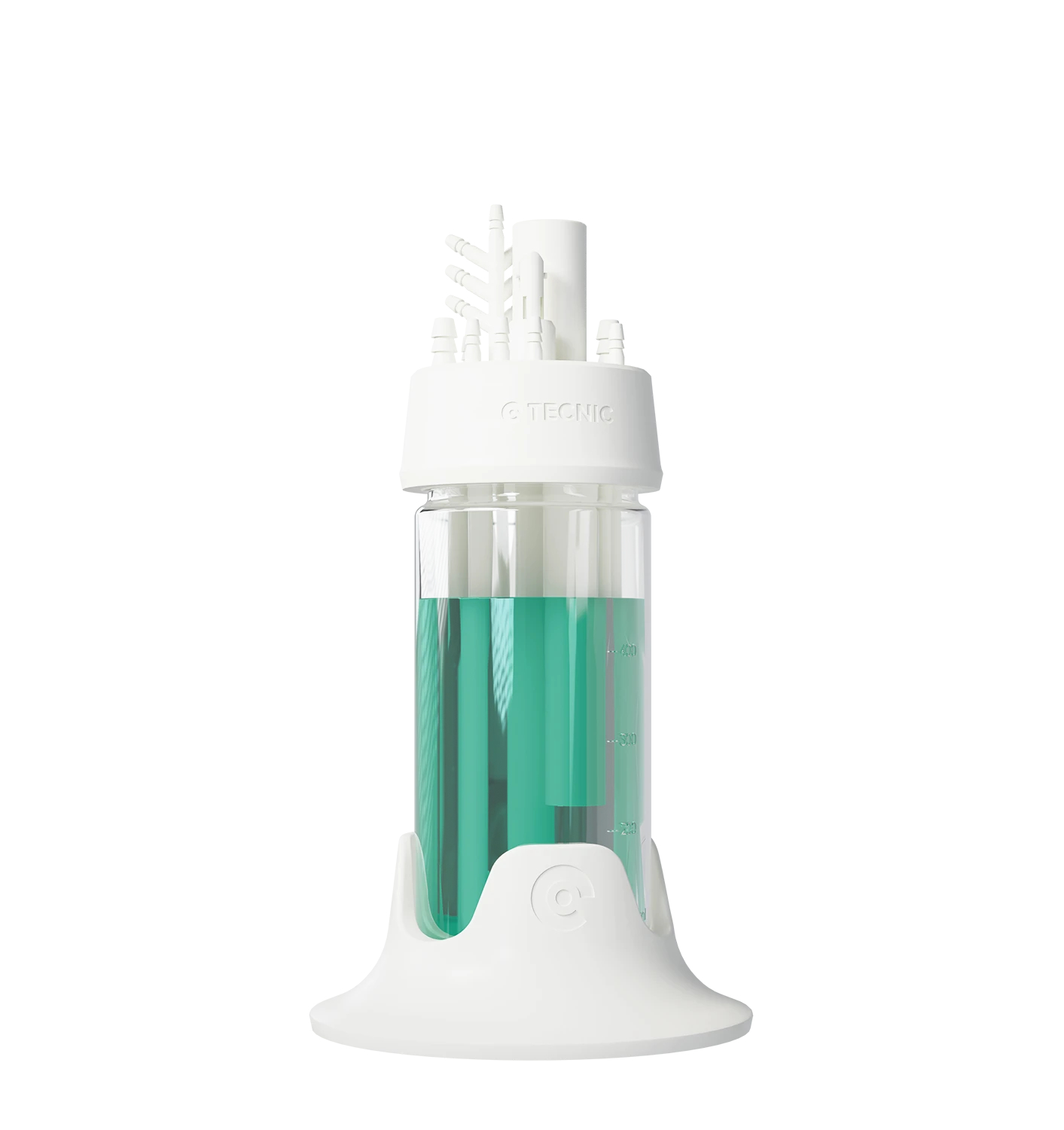
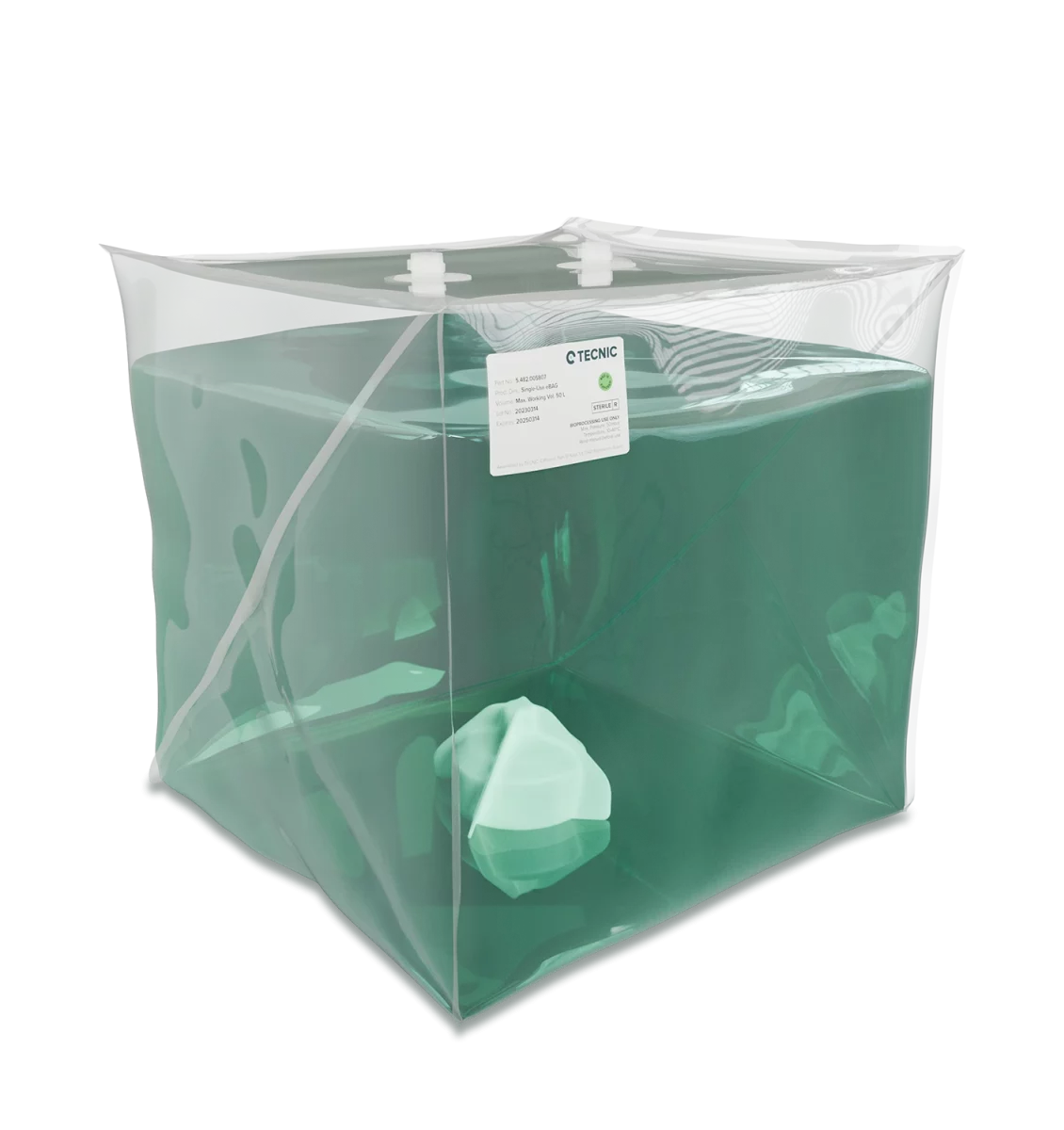
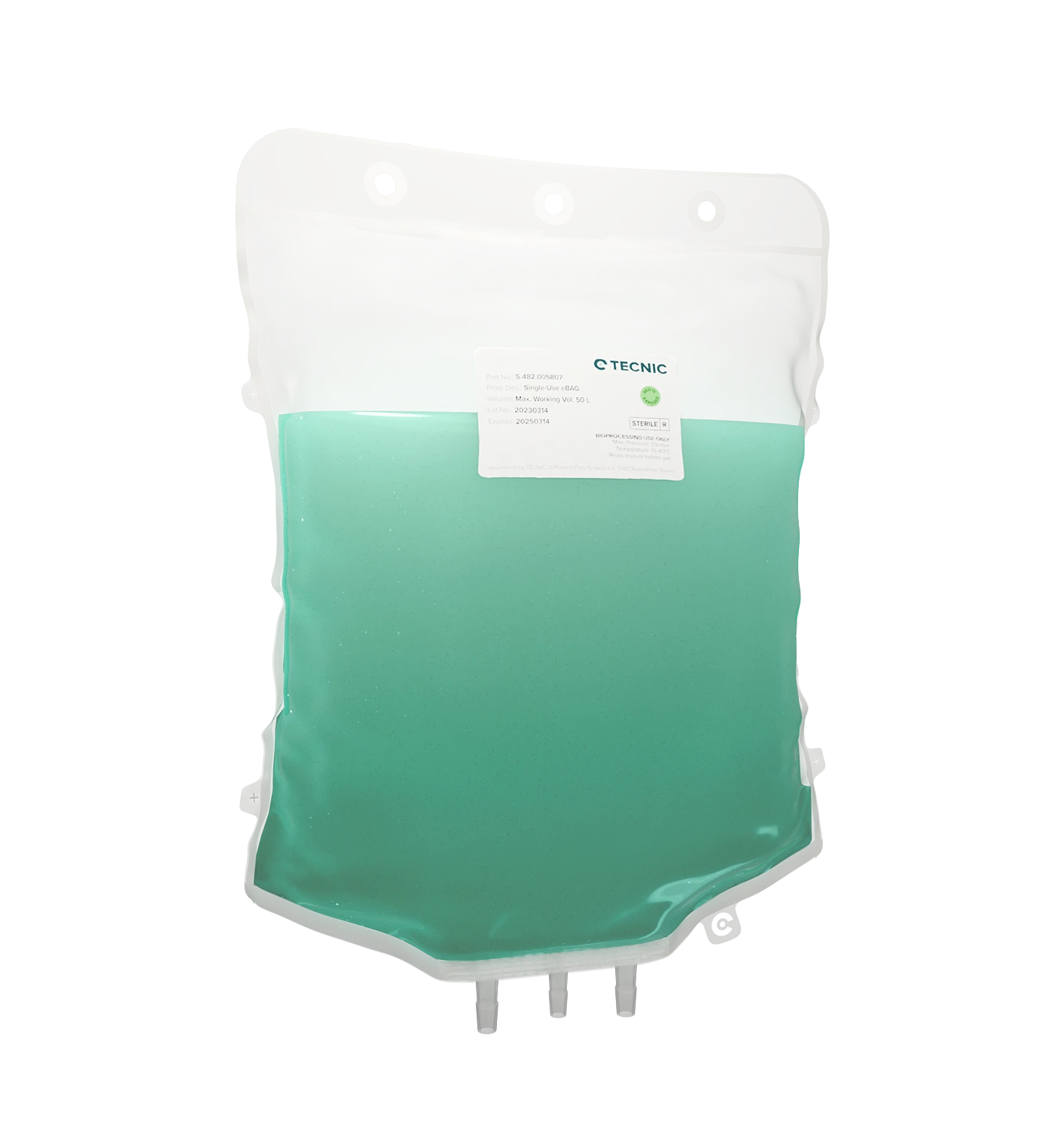
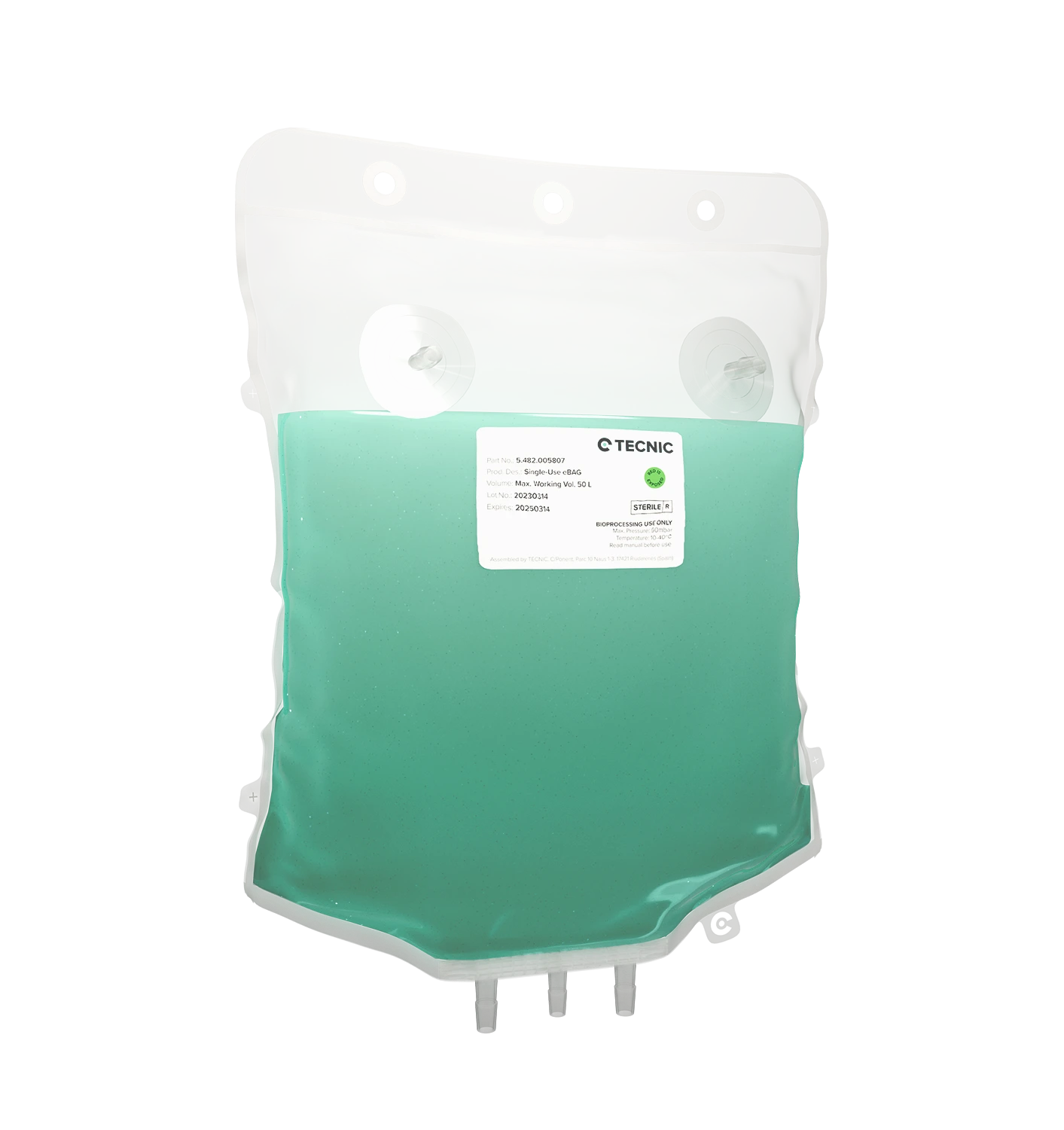
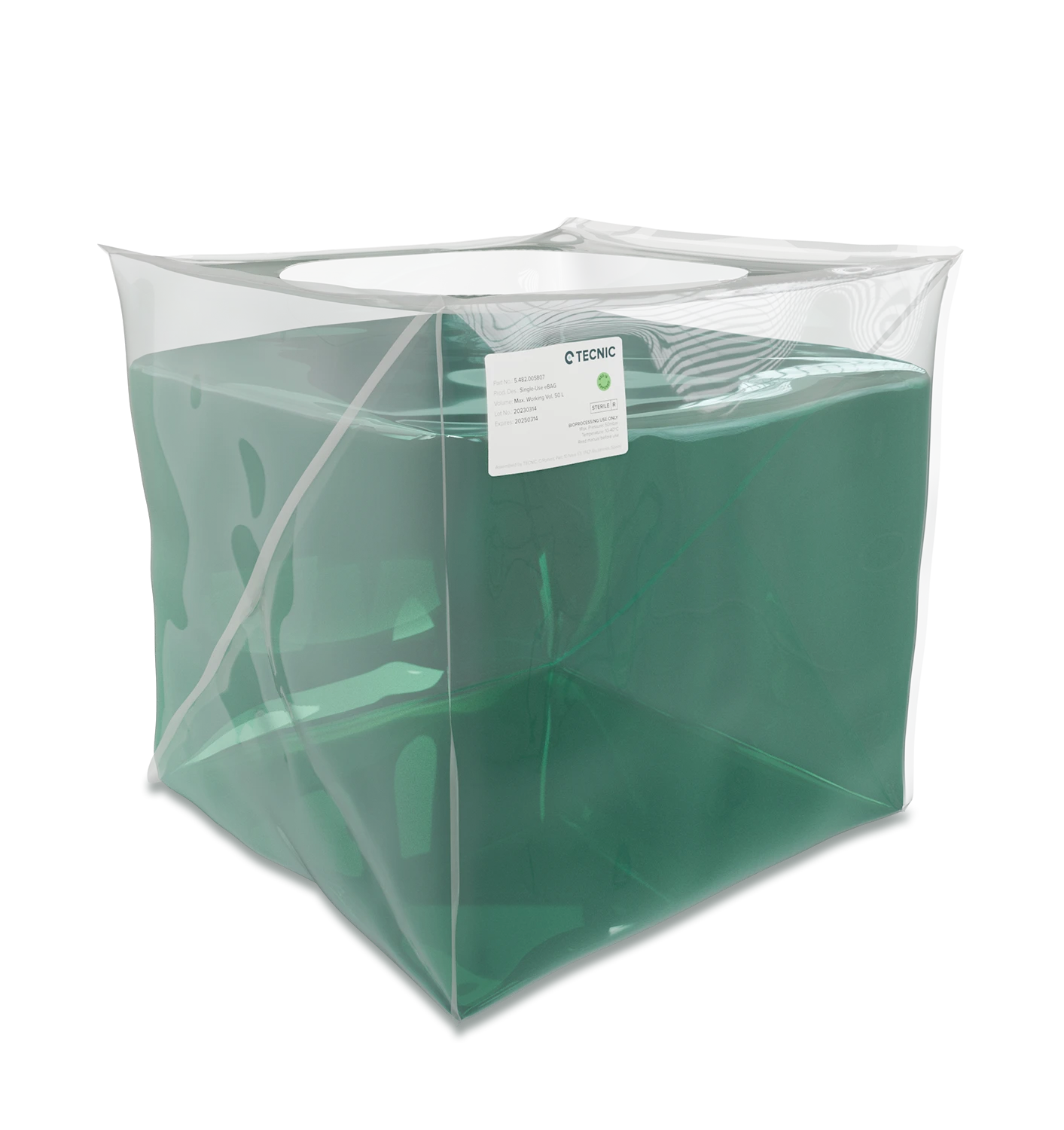
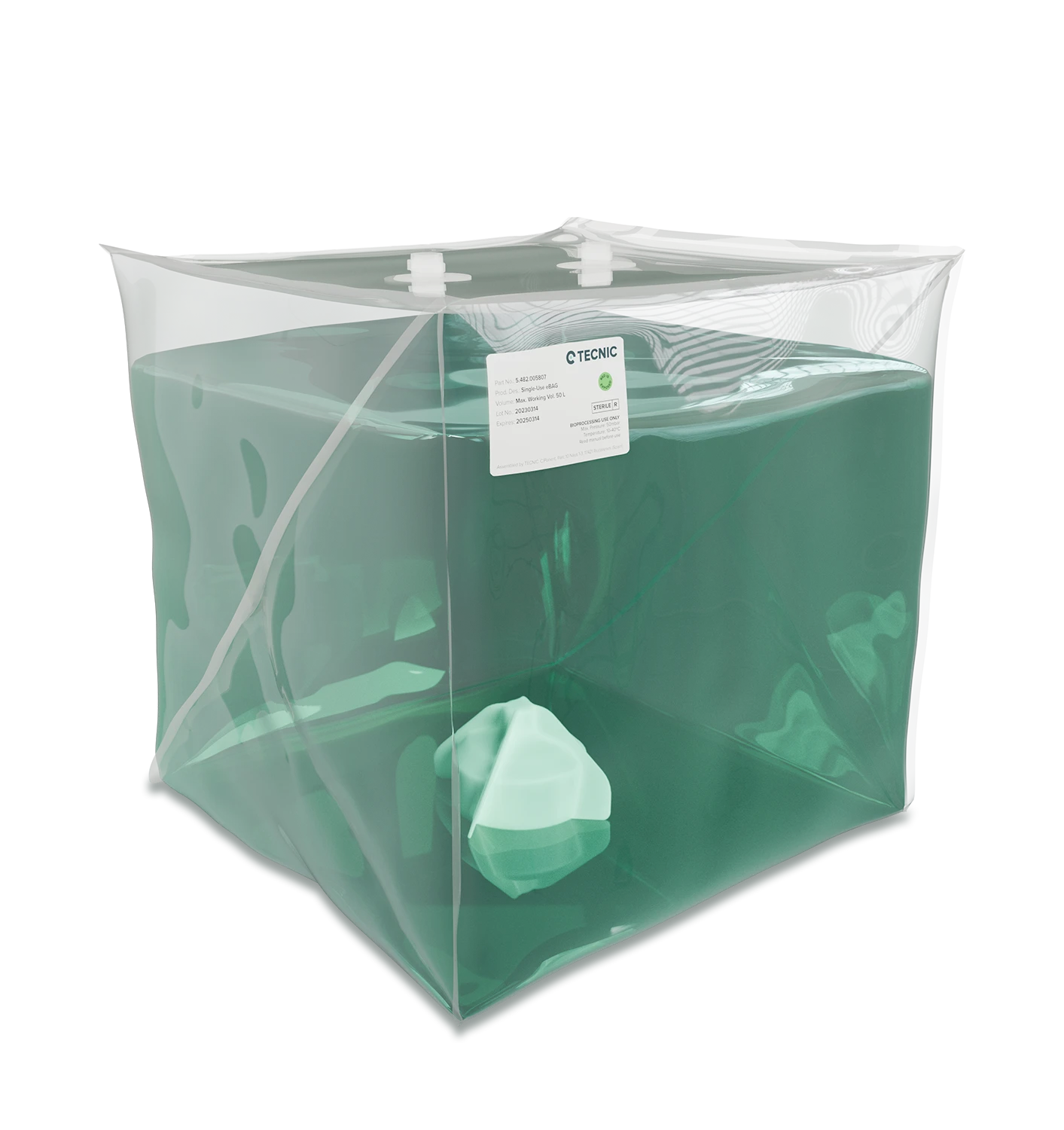
Compatible single-use consumable with integrated mixing impeller and application-specific port layouts.
That combination matters because it turns a single-use bag into a more complete process station rather than a passive container.
Models and working volumes
The platform supports four working volumes and keeps the same overall mixing logic across them, which is useful when the goal is to move between different batch sizes without changing the whole operational concept.
| Tank model | Nominal volume | Minimum volume to start agitation | Geometry |
|---|---|---|---|
| Tank 50 L | 50 L | 15 L | Square or cylindrical |
| Tank 100 L | 100 L | 20 L | Square or cylindrical |
| Tank 200 L | 200 L | 30 L | Square or cylindrical |
| Tank 500 L | 500 L | 55 L | Square or cylindrical |
Minimum working volume matters because mixing performance is only useful when the process stays inside a safe and controlled operating window.
Square vs cylindrical tank formats
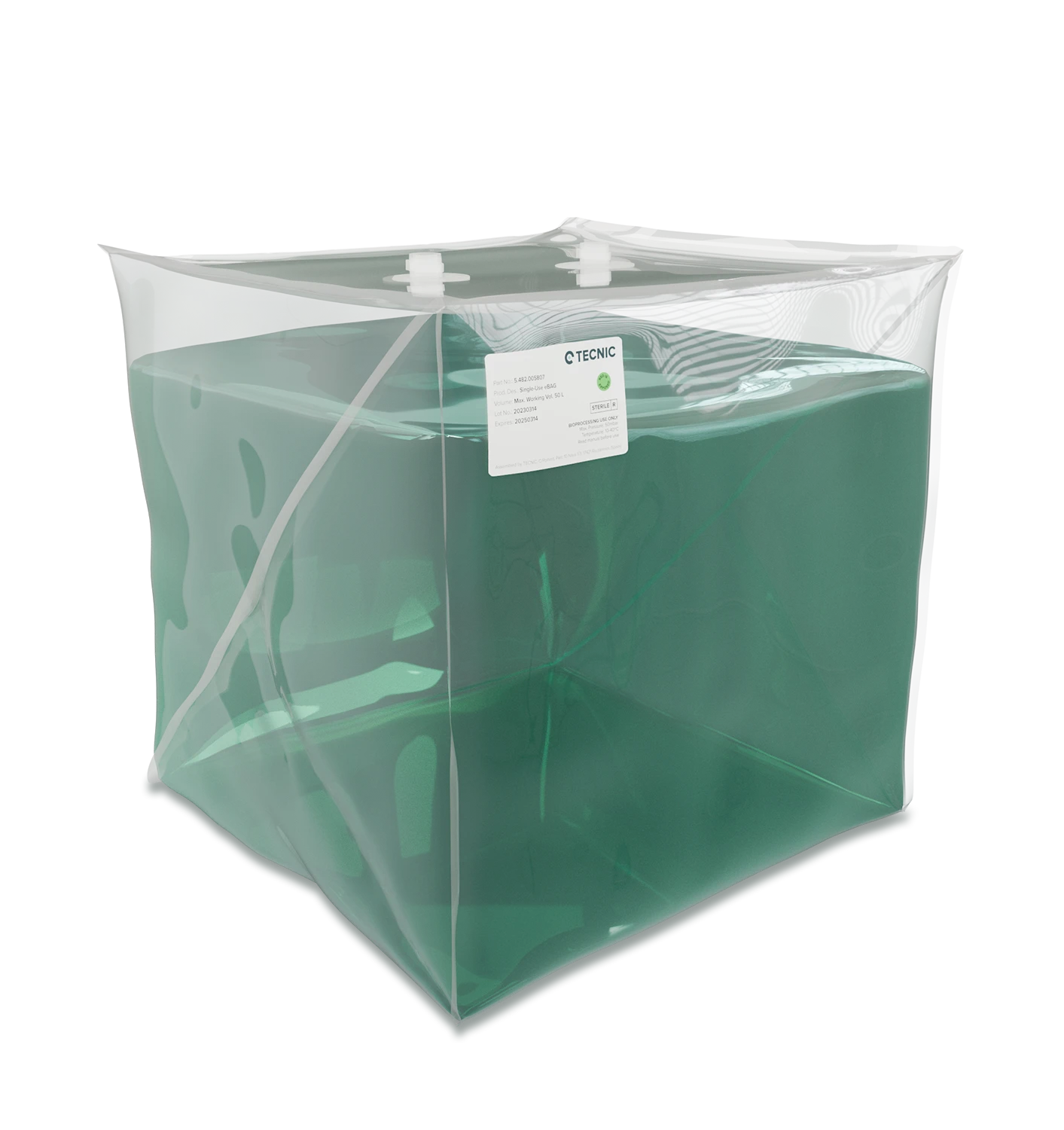
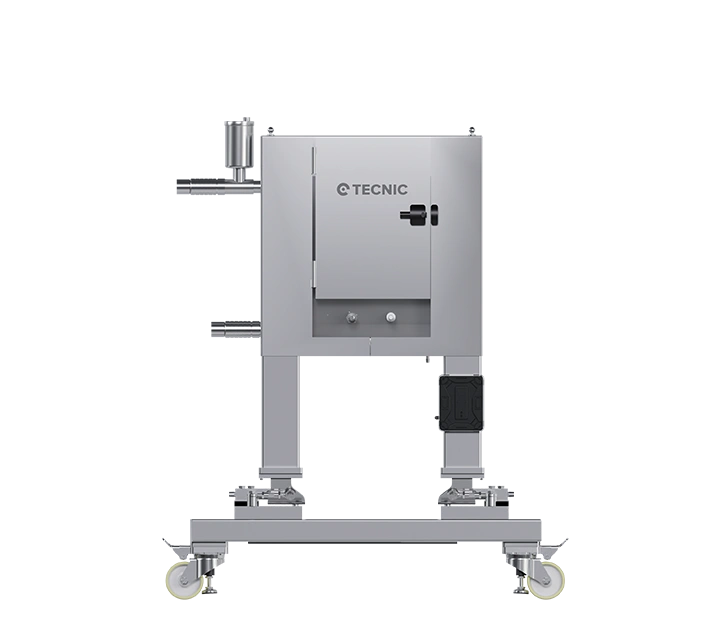
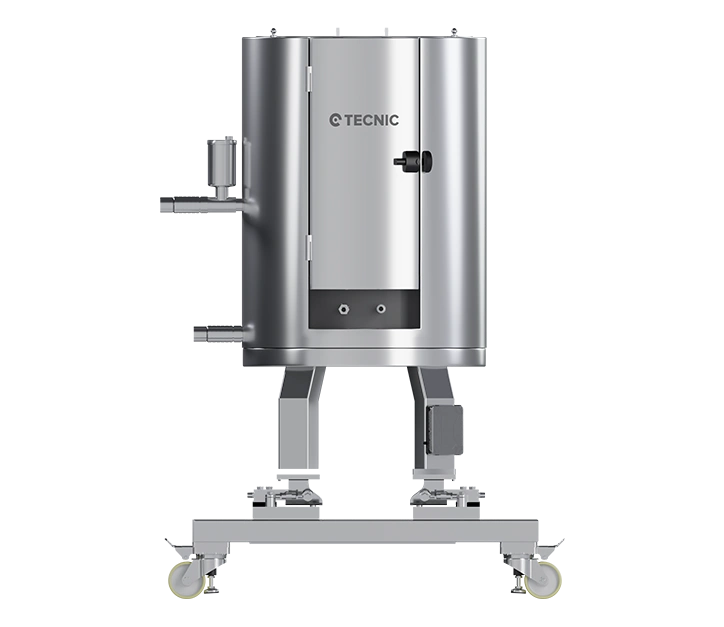
One of the practical strengths of the platform is that it can be supplied in square or cylindrical configuration, aligned with the matching single-use bag format.
Square format
Better suited when space efficiency and a cleaner workflow layout are priorities, especially in tighter areas where footprint matters.
Cylindrical format
Better suited when classic tank geometry and familiar handling are preferred inside a more standard plant layout.
Control, dosing and data management
A mixer becomes much more useful when the team can control not only agitation, but also additions, data capture and process integration.
Four integrated load cells and tare functions support more accurate additions and better repeatability.
Pumps for acid, base and media additions support manual use, automatic loops and profile-based operation.
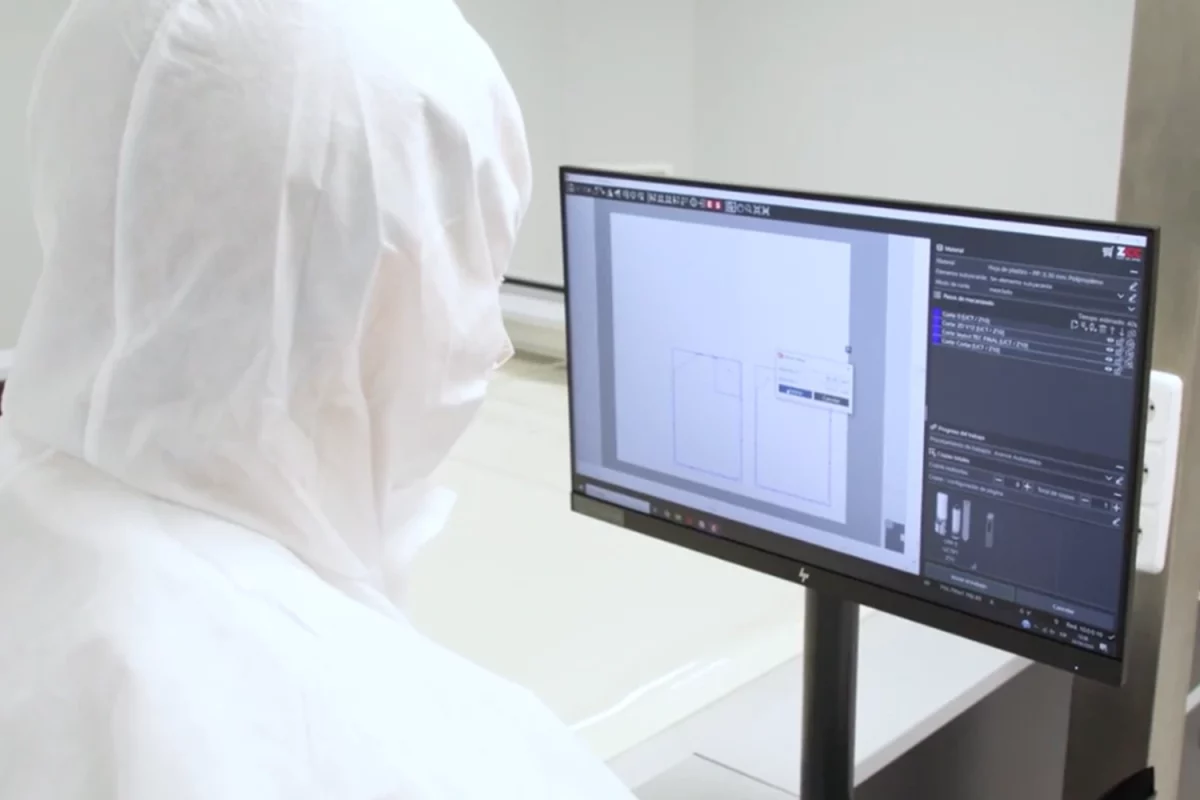
Base logging, trends, alarms and profiles are available, with optional eSCADA packages and OPC connectivity.
That combination is what helps the platform move beyond simple liquid handling and into more controlled process preparation.
Temperature control and single-use sensors
In some processes, basic mixing is enough. In others, stability depends on tighter control of temperature and process quality variables.
The ePlus Mixer can be configured with jacket-based temperature control and optional single-use pH and conductivity sensors using Arc technology with Modbus RTU communication. That allows closed-loop control and data acquisition inside the same environment.
These options matter when the process needs more than simple preparation and starts requiring tighter control of batch conditions.
Frequently asked questions
What is a single-use mixing system used for?
It is commonly used for media preparation, buffer preparation, mixing, temporary storage and controlled liquid handling in bioprocess workflows.
What volumes does the ePlus Mixer support?
The platform supports 50, 100, 200 and 500 L working volumes, depending on tank model.
Does it support both square and cylindrical formats?
Yes. The TANK SU platform and compatible eBag 3D consumables are available in square or cylindrical geometry.
How is mixing achieved?
Mixing is achieved through non-invasive magnetic agitation, with typical speed setpoints in the 120 to 300 rpm range depending on configuration.
Can the system include pH and conductivity sensors?
Yes. Optional single-use pH and conductivity sensors are available, together with temperature control options according to project scope.
Reviewing single-use mixing for media and buffer preparation?
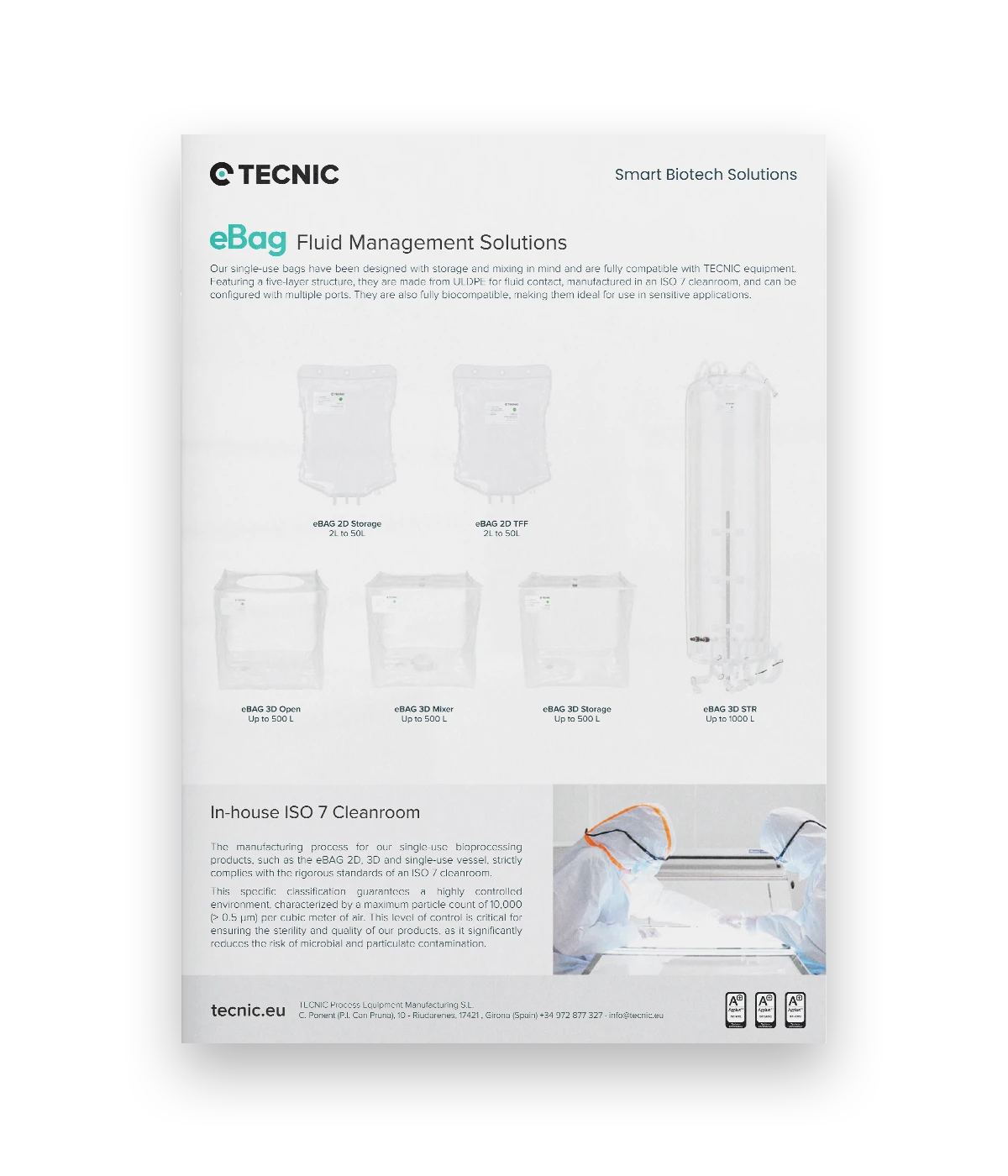
Explore the ePlus Mixer and the compatible eBag 3D Mixer consumable to understand how the full workflow can be configured.